Why Worldschooling? And Why Now? And what exactly is worldschooling?
Good questions! These are questions you may have either asked me directly or wondered after hearing of our decision to ditch our “stable life,” uproot our family, and spend a year “worldschooling” in Costa Rica, Australia, New Zealand, Spain, and Portugal.
And since we made this decision back in the spring, these are questions I have personally wanted to address in a post like this! But before I start, a disclaimer – I’m sure not everyone will agree with my reasoning or my cultural or political conclusions. That is totally fine, because I believe diversity of belief is a great thing that makes the world (and its communities) better!
Let’s start with the easy one – what is worldschooling?
Gemini defines “worldschooling” as “an alternative educational approach where children learn through travel, cultural immersion, and real-world experiences instead of being confined to a traditional classroom.” That about sums it up.
In practice, worldschooling looks different for every family who does it (as their stories online and in books will tell you) and runs the spectrum from “unschooling” (basically doing no formal education and using child-directed lived daily experiences as “school”) to formal enrollment in online learning programs or small group “worldschool programs” in various countries.
I would call our approach a student-centered and place-based homeschool approach that relies on my decade and a half of teaching experience (half in “alternative education”) and leans on the wide variety of real-world learning experiences and online resources available to us.
Ok, so why on earth would we want to do this?
First, I’ve always been fascinated by other cultures and far-away lands. The little-kid version of me geeked out on maps and flags, and loved learning about how people lived in other places and times. As a child, I created entire make-believe worlds, drew maps filled with make-believe nations and their make-believe capitals, seas, and flags. My siblings and I even ran mock Olympics using these entirely fictional worlds and places (they must have been good sports, because they even created their own make-believe countries and flags).
Second, I’ve always viewed myself more as a citizen of one common, shared world rather than part of one tribe bound to an arbitrary and ever-shifting geopolitical boundary. One of the apocryphal stories of my childhood involves the 8-year-old me learning about the Yugoslav conflict of the 1990s through daily NPR bulletins, and using my own money to send a shoebox of Christmas gifts to Bosnian children impacted by the ethnic conflict there.
My parents and grandparents fostered my curiosity and interest in history and culture. My paternal grandparents were world travelers who often returned home with pictures and stories of faraway places and even helped financially support my pre-adult travel. My maternal grandfather was highly interested (obsessed?) with Indigenous American culture, and under his influence I think I watched every “Indian movie” that existed by the 1990s. And my takeaway was always siding with the indigenous characters fighting to protect their lands and cultures, instead of the aggressive imperialists (isn’t that the lesson of Star Wars, too?).
My parents were both educators, and were more than happy to foster my interest in history and culture too. They toted my siblings and me to Revolutionary and Civil War sites up and down the East Coast, helped me borrow library books on whatever historical era I was interested in, and introduced us to world culture through weekly “around the world” meals and readings that we mostly disliked as kids, but have grown to appreciate now as adults.
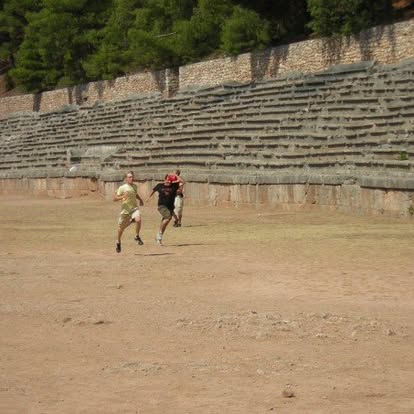
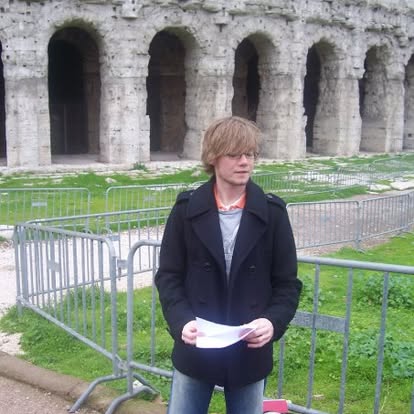
My interest in the world and its history and cultures has continued into adulthood. I traveled to Greece for a summer program during undergrad and spent a year completing an MA at Newcastle University in England, earning degrees in history and archaeology in the process. Additionally, Tasha and I honeymooned in France and England and rode out a hurricane for our ten-year anniversary in Jamaica. In sum, adult me loves to travel!
As parents do, I now want my children to at least understand, if not share, my interests. I want them to learn about (and experience) other places in the world, to better understand how others have lived in the past and live today. I want them, like me, to feel more like “world citizens” than tribally bound to any man-made geopolitical boundaries.
In my decade and a half as a teacher, I gravitated towards “alternative,” project-based approaches to teaching, brought students around New England and to Eastern Europe, and always enjoyed students who didn’t “fit the mold.” Worldschooling is the perfect intersection of my personal interests and professional experiences, the ultimate extension of hands-on, experiential, “alternative” education and an open minded exploration of the world around us.
So why now?
My reasoning for doing this now was driven by professional, personal, political, and cultural factors converging. Ultimately once we made the decision to sell our house in early 2026 (the “why” on that is a whole different story), we did some soul searching to discern what was going to come next for our family. Moving further south down the coast of Maine was the first (and most logical) option, but I also increasingly yearned for a break from the good old US of A. and its ever- toxifying cultural and political climate.
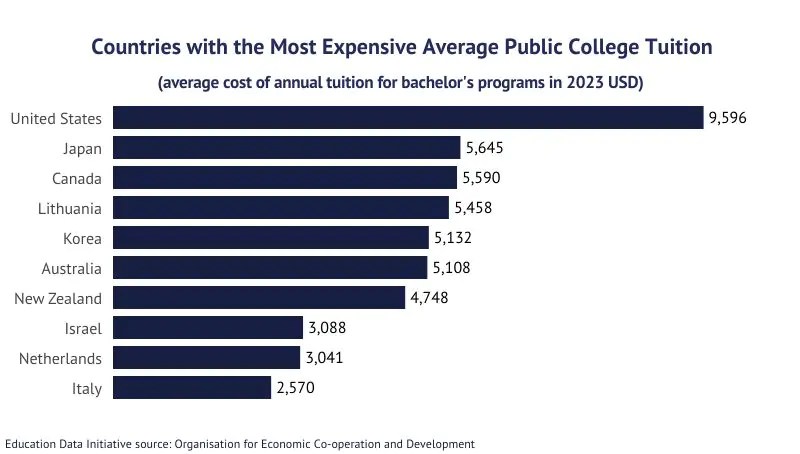
To be fair, America has SO MUCH potential, and SO MUCH to offer its citizens. However, I have never been believed in American exceptionalism. We do some things very well, but we do other things very poorly. In particular, unlike most other first-world countries, the US boasts healthcare, childcare, and higher education systems that are more effective at exploiting and profiting off of citizens than helping them.
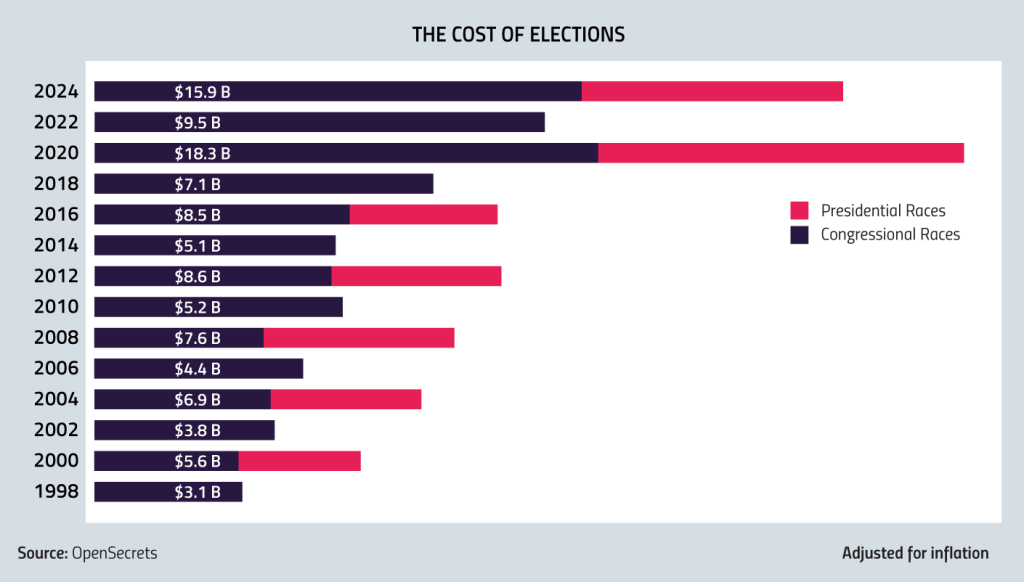
I genuinely wonder, do American leaders actually want people to have children, get educated, or receive adequate healthcare in our country? Or do they just want the campaign donations and special favors pouring in from the people running these, and other, industries? These are real questions. The money spent on the campaign ads that overwhelm our airwaves and news feeds could probably provide college, healthcare, and/or childcare for all American children.
Furthermore, I had (have) been growing particularly demoralized by the vapid emptiness of America’s profit-driven, tech-addicted, “likes-driven” culture, and saw my own children on the precipice of getting swept into that current. As a teacher, I saw the tremendous impact of tech and social media on youth. I watched “personality” get taken over by social media and the tech titans profiting from it. I longed for my children to see the world for themselves, not through a screen, to develop their own perspectives rather than simply adopting those of the trendiest influencer.
When we outsource “culture” to technology companies and their oligarchic leaders (whose primary motivation is profit), we lose culture’s essential human-driven social elements. At the moment, American culture, society and politics are being driven by the interests of Big Tech. The pervasive reach of the internet has made us all easy prey and affects children and adults alike; its tendrils are everywhere all the time always.
This is because we are, as a society, addicted to our tech. Merriam Webster defines addiction as “a compulsive, chronic, physiological or psychological need for a habit-forming substance, behavior, or activity having harmful physical, psychological, or social effects,” or, more simply, “a strong inclination to do, use, or indulge in something repeatedly.” Think about that second definition. If you have a smartphone chances are you understand. Guilty as charged, personally.
None of us are immune. It’s not “just the kids.” The kids just follow what the adults are doing, and do what the adults let them do. Don’t blame the user either, especially when the pusher knows exactly what he’s pushing and how addictive it is. Tristan Harris, Jonathan Haidt, and many others much more qualified and experienced than me have tried to sound the alarm on this, and I think more and more people are wising up.
But sadly, the pervasive reach of the internet has amplified an already-present “follower” impulse that is present in all humans. And our current attention-based, profit-driven internet culture has watered down “personality” and “culture” into whatever the person with the most views and likes is doing. “Likes” equals traffic equals money. Individualism, uniqueness, cultural growth, and open-mindedness have been subsumed by a robotic following of whatever is trendiest (and most profitable).
Unfortunately political interests have recognized how powerful technology can be in shaping the minds and views of a populace. Quite honestly, I am most fearful about the current intersection of technology, culture, and politics, and I worry where it will lead us in the very near term. I also wonder what our country, and the world, will look like by the time my children grow old.
History provides many examples of how horribly wrong things can go when selfish political actors use propoganda to manipulate people for personal ends. As a student and teacher of history I think we must take these lessons seriously. The worst thing a person or a country can do is pretend they are immune from history. The internet (and AI in particular) is adept at turning ideas motivated by the personal desires of the few into the widely-held convictions of the many.
It is difficult to talk about political things, because of how toxic, tribal, and polarized this conversation has become. To say the least, I am not a fan of our current political discourse (or lack thereof). I believe too many of us have stopped listening to others and outsourced our political views (and our human decency) to entities whose primary motivations are profit or power.
I have grown increasingly disillusioned with our politics and demoralized to see many who I once shared a common worldview with lurch increasingly (compulsively?) towards an insidious, hate-and-fear-filled brand that celebrates bullying, belittling, and “othering” of our fellow world citizens. While there is hate and intolerance on both sides of the political aisle, one side seems to glorify and celebrate these elements while belittling traits like kindness, empathy, and tolerance. These are traits that I was raised to believe were inseparable from my religious upbringing. All I can think is, what would Jesus do?
Again, I will leave the conversation there, because I’m simply sharing the reasons I sought refuge from our current political and cultural climate in America. I have no desire to make enemies of friends; this has become FAR too common in our current cultural and political climate. I want those who disagree with me to either ponder the merits of my argument or agree to disagree.
But in summary, trends over the last decade in American political and cultural life have led me to feel increasingly sad and demoralized. I knew American could be better, but wasn’t at the moment. I want better for my children, or I at least want them to see what else exists out there in the wide, wide, world with their own eyes and not through a filter of a self-serving politician or through the lens of some “influencer” somewhere.
If ever, now felt like the right moment to embark on this worldschooling adventure. And if you made it to the end of my monologue, congratulations. And thank you for listening. I’m so glad you’re joining us on our journey!


Leave a comment